Food photography is one of those specialised photographic genres, but with over 20,000 recipes on Local, it is one that provides a lot of bang for buck.
There comes a time when we are taking photos for our story when we wish to minimise some of the components in a shot. Some components may distract from the focus of the story, some may need to be disguised for legal or taste reasons.
The Pedestrian Blur
In high traffic areas, taking photos of buildings, store-fronts and the like can be challenging becasue every shot will have pedestrians in the foreground.
What this photographer has done is simply slow the shutter speed down, enabling the still objects to remain crisp, while any moving objects become a blur. You can see the details of the settings in their EXIF data.
An alternative method is to use the depth of field to provide a focal point for an object, and conversely soften the focus on extraneous content.
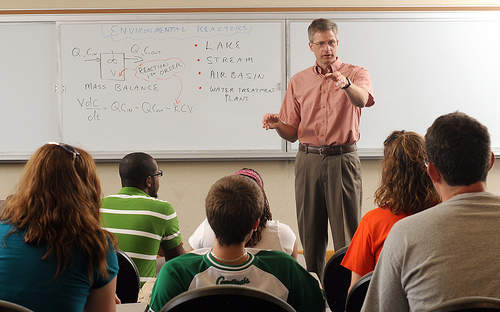
In this case the background isn’t so much extraneous content, but the plan is to blur the children so they can’t be identified, while concentrating on the teacher. (The photo isn’t great but you get the idea)
This method is also great for shooting people in areas such as racetracks, where there might be a high concentration of advertising banners and billboards in all backgrounds.
Changing your shooting angle
You see this method used most commonly in shooting classrooms where you don’t want to identify the children in the class, but do have permission to present the teacher. By shooting from behind the children you can focus on the teacher but the audience sees at a glance he is in a classroom.
These are just a few tricks for focusing on what you want into a shot, while minimising elements that may be important but are necessarily ‘unfocused’ for one reason or another. If you have some of your own, let us know.