• How to not take photos

    There comes a time when we are taking photos for our story when we wish to minimise some of the components in a shot. Some components may distract from the focus of the story, some may need to be disguised for legal or taste reasons.

    The Pedestrian Blur

    In high traffic areas, taking photos of buildings, store-fronts and the like can be challenging becasue every shot will have pedestrians in the foreground.

    What this photographer has done is simply slow the shutter speed down, enabling the still objects to remain crisp, while any moving objects become a blur. You can see the details of the settings in their EXIF data.

    Here they have slowed the shutter speed to 0.3 of a second, emphasizing any movement in the shot.

    http://www.flickr.com/photos/aboodoo/4395571350/ on Flickr

    Using Depth of Field

    An alternative method is to use the depth of field to provide a focal point for an object, and conversely soften the focus on extraneous content.

    In this case the background isn’t so much extraneous content, but the plan is to blur the children so they can’t be identified, while concentrating on the teacher. (The photo isn’t great but you get the idea)

    This method is also great for shooting people in areas such as racetracks, where there might be a high concentration of advertising banners and billboards in all backgrounds.

    Changing your shooting angle

    You see this method used most commonly in shooting classrooms where you don’t want to identify the children in the class, but do have permission to present the teacher. By shooting from behind the children you can focus on the teacher but the audience sees at a glance he is in a classroom.
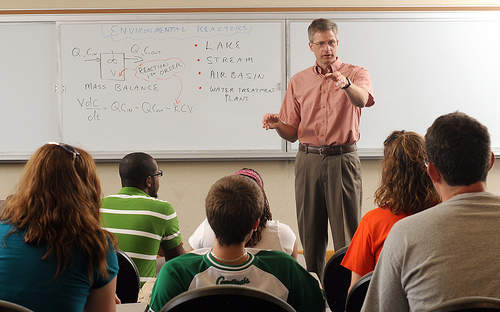
    ( Source: michaeljlewis.wordpress.com )

    These are just a few tricks for focusing on what you want into a shot, while minimising elements that may be important but are necessarily ‘unfocused’ for one reason or another. If you have some of your own, let us know.

    ( originally posted on Mixed media reporting tumblr )
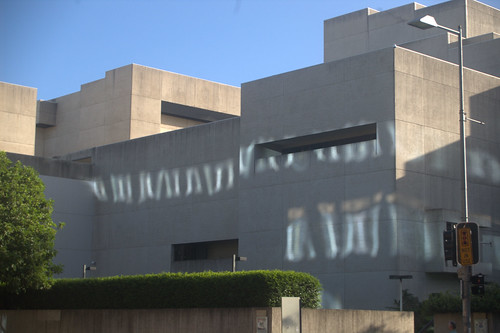
  • QPAC light show


    IMGP7577 – QPAC, a photo by RaeAllen on Flickr.

    Came across this interesting light show on the side of the Queensland Performing Arts Centre.

    It was actually the morning sun refracting from the angled glass windows of the new section of the Brisbane Convention Centre

    Via Flickr:
    Light refracted from the new Convention centre section appearing on the walls of QPAC

  • Focus on your subject using PS Elements

    There are a number of ways to improve the focus on your subject using PS Elements.

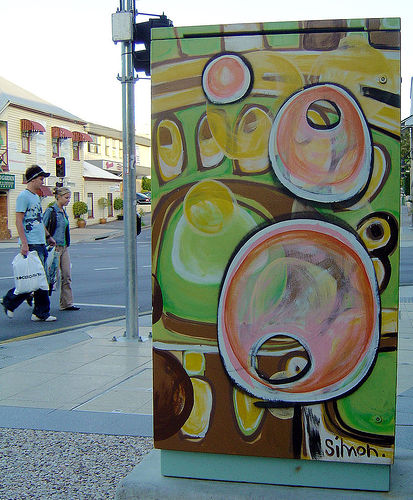
    I’m going to start with one of my own photos – a Traffic Signal Box.

    B0730 – DSC02716- tsb-edmonstone by Rae Allen, on Flickr

    It would be an OK image but the background is a bit hot, the walkers may be a bit distracting, and the colours are a bit washed out.

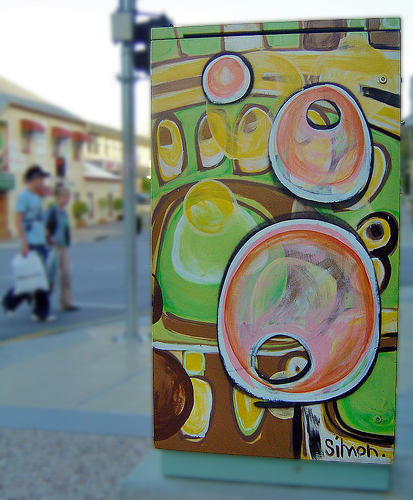
    I’m going to use PS Elements to make the TSB stand out more, and in a process that is about 5 minutes work.

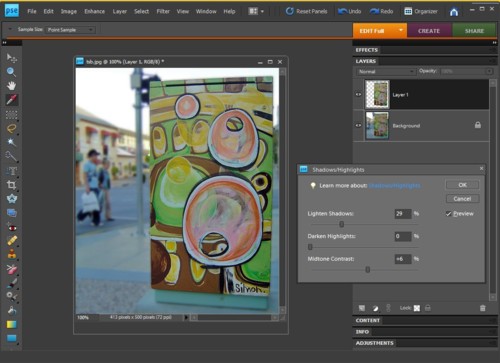
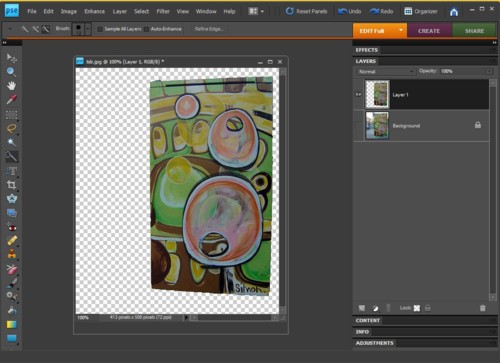
    First I select and copy the main object. Now you know why I chose the signal box – its regular shape. Add that copy back in as a new layer.

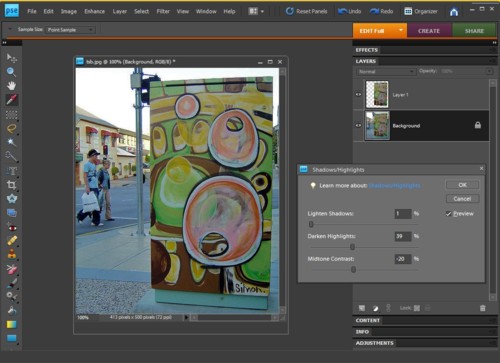
    Working on just the background, darken the image.

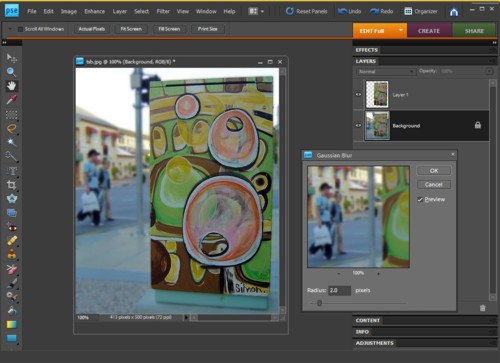
    Still just working on the background apply a Gaussian blur.

    At this stage you already have the TSB standing out, but it is time to work on the foreground.

    First adjust the lighting:

    Then increase the colour saturation:

    The result – a photo with far more focus on the subject, and worth comparing to the original if you were using it in a story.

    I should mention that a lot of the effects added to this photo could have been achieved in taking the image itself – I just didn’t think about it at the time.

    ( originally posted on Mixed media reporting tumblr )

  • Using SSI to select a day

    You can use SSI to select a specific day, and then carry out an action. You can also determine that action to be carried out at a certain time on that day.

    1. First configure the time format to the day of the year
      <!–#config timefmt=”%j” –>
    2. Then use an SSI to select a specific day
      <!–#if expr=”($DATE_LOCAL = /75/)” –>
      This will select the 15 March in 2012
    3.  You can use SSI to select a number of days.
      <!–#if expr=”($DATE_LOCAL = /75/)||($DATE_LOCAL = /76/)||($DATE_LOCAL = /77/)||($DATE_LOCAL = /78/)||($DATE_LOCAL = /79/)||($DATE_LOCAL = /80/)||($DATE_LOCAL = /81/)” –>
      This will select from day 75 through to day 81
    4. You can also select a specific time within this day
      <!–#if expr=”${DATE_LOCAL} = /296/ “–>
      <!–#if expr=”((${DATE_LOCAL} > 2961659) && (${DATE_LOCAL} < 2961901)) “–>
      This will look at day number 296, and then carry out the command for the time from 1659 local time to 1901 local time based on the server.
  • Use of light when shooting portraits

    This is a good explanation of the use of light when shooting portraits.

    While the video uses studio lighting to explain the effects, the same sort of principles apply when you are using natural light.

    Similarly while the story is about shooting still photos, the same concepts can be applied to shooting video, using light sources for affect.

    (Source: theslantedlens.com)
    ( originally posted on Mixed media reporting tumblr )

  • Returning to the scene of the crime

    While we tend to do a good job with stories as they unfold, we often fail to follow-up. What happens after the court case, the flood, the award winning?

    With or without you is a Reuters story, returning to the story behind one of their high profile images from the Japanese Tsunami.

    The main image is one of those great shots, but more interesting to me in this ‘revisit’ context, is the three images of Yuko Sugimoto on the highway.

    These three photos show a consistent style, starting with Yuko’s own dilemma, and concluding with her son replacing the photo in her arms.

    This sort of presentation style is outside our current CMS, but it would work in a blog post, and will be possible in our new Core Media CMS.

    ( originally posted on Mixed media reporting tumblr )
  • Take into consideration all of the elements

    “When you’re out shooting, it’s really important to take into consideration all of the elements that are presented to you. You need to constantly ask yourself whether this thing or that thing can help you tell your story more effectively.”

    On Using Elements In Your Scene To Help Tell Your Story

    ( originally posted on Mixed media reporting tumblr )
  • Make the murky consumable

    https://mpegmedia.abc.net.au/local/brisbane/conversations/201006/r591615_3788293.mp3?_=1

    Satyajit Das is one of the world’s leading experts in derivatives and risk management. He’s worked in financial markets for over 30 years, and consults to banks and investors.

    In this conversation, Richard Fidler manages to take the murky financial jargon and turn quite complex ideas into a consumable piece of audio

    ( originally posted on Mixed media reporting tumblr )
  • Balance in a photo

    This is a good example of balance in a photo. Notice the bench with the two friends in the top left third junction, balanced by the bicycle in the bottom right third.

    (oiginally written for abcmmr blog photo courtesy Josh Adamski )

  • Graffiti Melbourne


    Graffiti Melbourne, a set on Flickr.

    Collections of graffiti photos taken in Melbourne lane ways